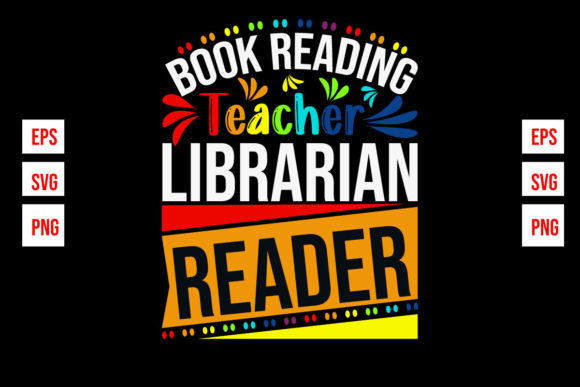
Book Reading Teacher Librarian Reader Design Review
As a professional embroidery designer and product reviewer, I approach every new digital asset with a critical eye. When evaluating the Book Reading Teacher Librarian Reader design, my primary concern is not just how it looks on a screen, but how it translates into thread on fabric. This graphic falls under the Print Templates and Graphics category, yet for makers and Etsy sellers, its true value lies in its adaptability as a machine embroidery design or sublimation transfer. Having worked extensively with educational and literary themes, I can confidently say this design carries a specific nostalgic warmth that resonates deeply with teachers, librarians, and avid readers. However, moving from a digital ZIP file containing EPS, SVG, and PNG formats to a tangible handmade product requires careful technical consideration.
First Impressions and Visual Personality
Upon opening the files, the visual hierarchy of the Book Reading Teacher Librarian Reader immediately suggests a cozy, intellectual aesthetic. The composition balances textual elements with illustrative motifs, creating a mood that is both professional and approachable. For an embroidery project, this balance is crucial. Designs that are too text-heavy often result in dense stitch areas that can pucker lightweight fabrics, while designs that are purely illustrative may lack the personalization clients crave. This graphic strikes a middle ground, making it suitable for custom apparel and personalized gifts without feeling overly cluttered.
The vector nature of the EPS and SVG files is a significant advantage. As a designer, I appreciate clean lines that scale without pixelation. Whether you are resizing this for a small embroidered patch or expanding it for a large tote bag design, the integrity of the artwork remains intact. The PNG file serves as an excellent reference for printable mockups, allowing you to visualize the final product before committing thread to fabric. This versatility is essential for craft business owners who need to present professional digital product previews to customers before production.
Real-World Application: The Library Tote Bag Test
To truly evaluate this asset, I mentally placed it in a real-life scenario: creating a premium canvas tote bag for a local library fundraiser. In this context, the Book Reading Teacher Librarian Reader needs to perform as more than just decoration; it must serve as a badge of identity. Canvas is a forgiving fabric texture, but it requires proper stabilizer to prevent distortion during stitching. If converting this graphic into an embroidery file, I would recommend utilizing a combination of fill stitch for the book elements and satin stitch for any bold lettering. This mix ensures the design has tactile variety, which elevates the perceived value of the finished product.
For sweatshirt embroidery, specifically on fleece or French terry, the design’s layout works beautifully on the left chest or centered back. However, because these fabrics have pile, using a water-soluble topping is non-negotiable to keep the stitches from sinking. I envision this design performing exceptionally well for holiday embroidery projects, such as teacher appreciation gifts or librarian retirement presents. The theme is timeless, meaning inventory created with this design won't feel dated after a specific season passes. For Etsy sellers, this longevity translates to better ROI on design assets.
Technical Considerations and Fabric Limitations
While the Book Reading Teacher Librarian Reader is versatile, it demands respect for technical limitations. Not every fabric is a candidate for this level of detail. I advise extreme caution when applying this to stretchy performance wear or thin knits without significant modification. The stitch density required to render book spines and text clearly can create a stiff patch on flexible garments, leading to tunneling or fabric tear over time. If you intend to use this for baby embroidery on onesies, you must simplify the design significantly, perhaps isolating just the book icon and reducing stitch count to maintain garment softness and safety.
Dark fabrics present another challenge. If the original graphics rely on light colors or fine lines, they may disappear against navy or black apparel. Always test thread colors against your specific fabric swatch. A design that looks vibrant in a digital preview might require a white underlay or outline when stitched on dark material to pop effectively. Additionally, curved surfaces like caps require specialized digitizing. Simply shrinking a flat design for a hat hoop often results in registration errors. Ensure your embroidery software can warp the design to match the cap's curvature, or stick to flat applications like aprons, pillow covers, and tea towels where the Book Reading Teacher Librarian Reader will lie flat and stitch out cleanly.
Elevating Product Value and Customer Trust
In the competitive landscape of commercial embroidery and handmade goods, presentation dictates price. Using high-quality graphics like this one signals professionalism. When a customer sees crisp lettering and balanced proportions on a custom apparel piece, they trust the maker’s expertise. Conversely, poorly executed designs with jumping threads or misaligned elements erode confidence. By leveraging the scalable vector files included in the download, you ensure that your embroidered patch or boutique branding remains sharp regardless of size.
Furthermore, this design supports brand consistency for small shop products. If you are building a niche store focused on academic or literary merchandise, having a cohesive visual style across tote bags, mugs (via sublimation), and apparel creates a recognizable brand identity. The ability to use the same source file for both physical embroidery projects and digital marketing materials streamlines workflow and maintains aesthetic unity. Buyers engage more readily with shops that look curated and intentional rather than scattered.
Essential Designer Notes Before Stitching
Before you load the Book Reading Teacher Librarian Reader into your machine or send it to production, adhere to these practical protocols:
- Verify Licensing: Confirm whether your purchase includes commercial rights for selling finished products or if it is limited to personal use. This distinction is vital for Etsy sellers and craft business owners.
- Test on Scrap Fabric: Never stitch directly onto a final product without a test run. Use similar fabric weight and texture to check for puckering, tension issues, or design flaws.
- Check Hoop Size Compatibility: Measure the design dimensions in your software. Resizing beyond 20% can distort stitch angles and density. Select the appropriate hoop size to minimize re-hooping.
- Evaluate Stitch Density: If converting from SVG to embroidery format, adjust density based on fabric type. Reduce density for delicate fabrics and increase support for heavy textures.
- Mockup in Black and White: Viewing the design in grayscale helps identify contrast issues that color might hide. Ensure all elements remain distinct without relying solely on hue differences.
- Stabilizer Selection: Match stabilizer weight to the design complexity and fabric stability. Cut-away is generally safer for wearable items, while tear-away suffices for stable woven fabrics.
- Inspect Small Details: Tiny text or intricate book pages may not stitch well at smaller sizes. Simplify or remove elements that fall below the minimum legible stitch threshold.
The Book Reading Teacher Librarian Reader offers immense potential for creators willing to apply technical diligence. Whether you are producing a heartfelt personalized gift or scaling a line of commercial embroidery merchandise, success lies in understanding the relationship between the digital file and the physical medium. By respecting fabric characteristics, testing thoroughly, and utilizing the provided vector assets wisely, you can transform this graphic into a best-selling staple in your creative repertoire. Remember, a great design is only as good as its execution, so take the time to let your craftsmanship shine through every stitch.